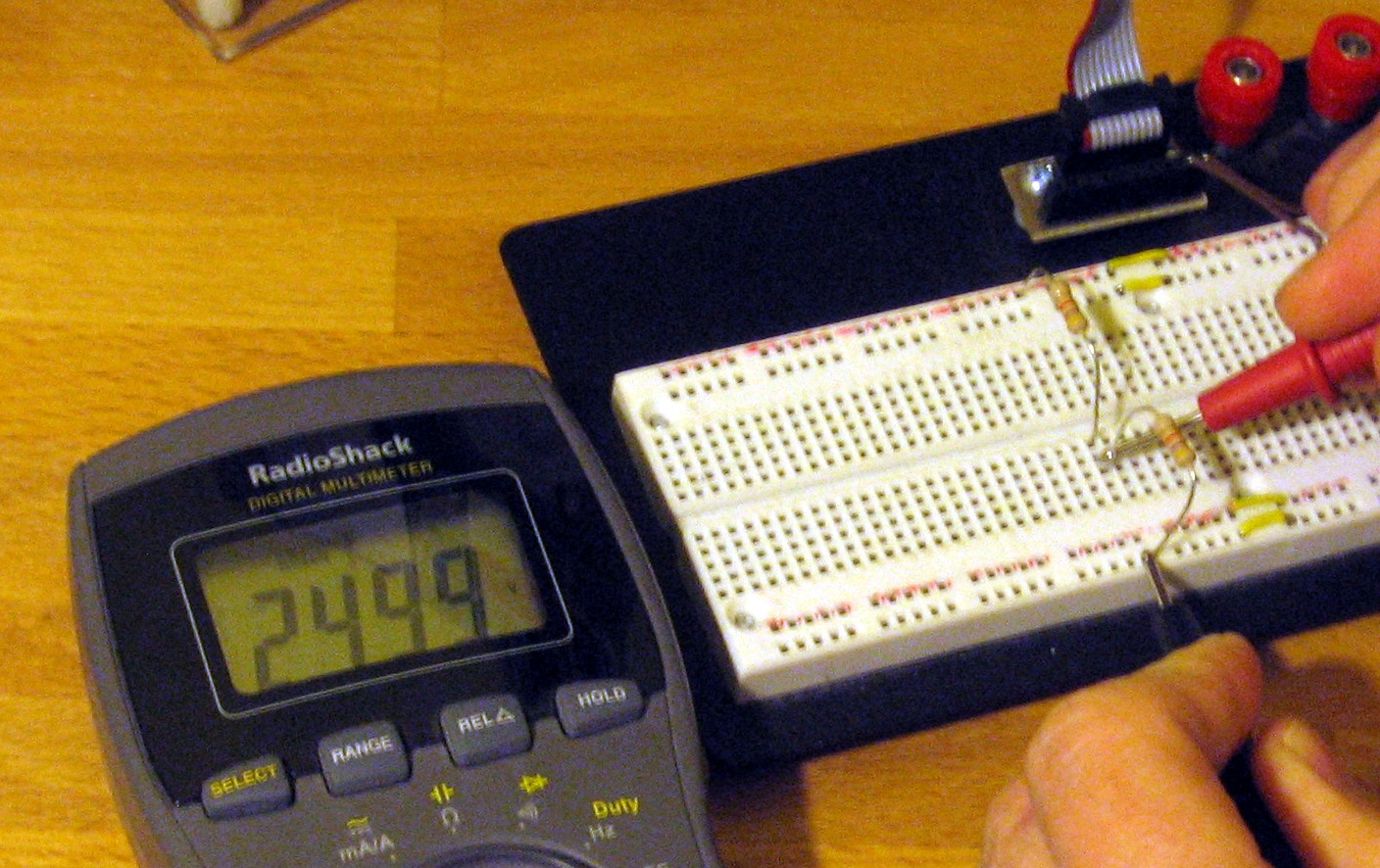
A voltage divider uses two or more resistive elements to output a lower voltage than was input. This can have many functions, like allowing communications between devices operating at different voltages, and acting as inputs for devices that have variable resistance. After the break I’ll look at some of those uses, and cover the basic principles of voltage dividers.
Category Archives: Tutorials
Voltage regulation with our friend the 7805
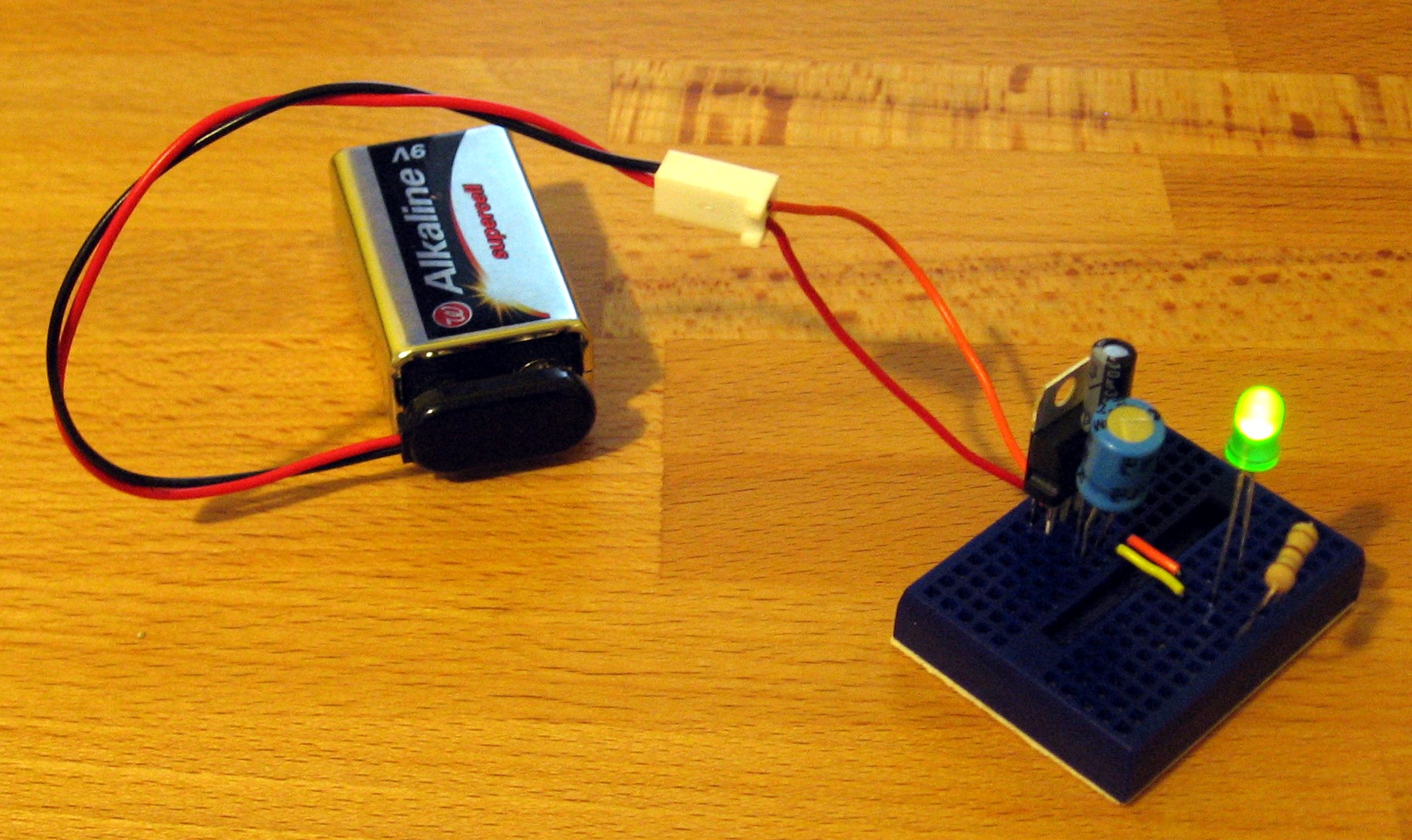
Sure, there are some times when you can get away with using unregulated voltage. But if you want your project to work reliably, you need to provide a reliable power source. If you ask me, the easiest and least expensive way of doing this is to use a linear voltage regulator. You’ll need just three parts, but you might roll in a few more to add features. And the good news is that these regulators are available with many different voltage output levels.
I’m going to illustrate their use with a 7805 regulator. It puts out 5V and you can buy it at Radio Shack or order if from your favorite parts supplier. If you look hard enough you might find one to salvage in your junk bin. I’ll get started on it after the break.
Using LEDs in your circuits
One of the first thing’s you’re going to want to do when getting into hobby electronics is to light up some LEDs. Take the time to read through this guide and you’ll have a basic understanding of how they work and how to use them.
How to drive 595 shift registers with AVR hardware SPI
Driving a shift register using an AVR chip’s built-in hardware is really quite easy. Most of their offerings have an SPI module, or Serial Peripheral Interface. A shift register is exactly that, a peripheral device that communicates via a serial line. All we need to do is hook up our connections and use a few pieces of simple code. Join me after the break to see how that’s done.
Just want to know how shift registers work? Check in on my other post on that topic.
How Shift Registers Work
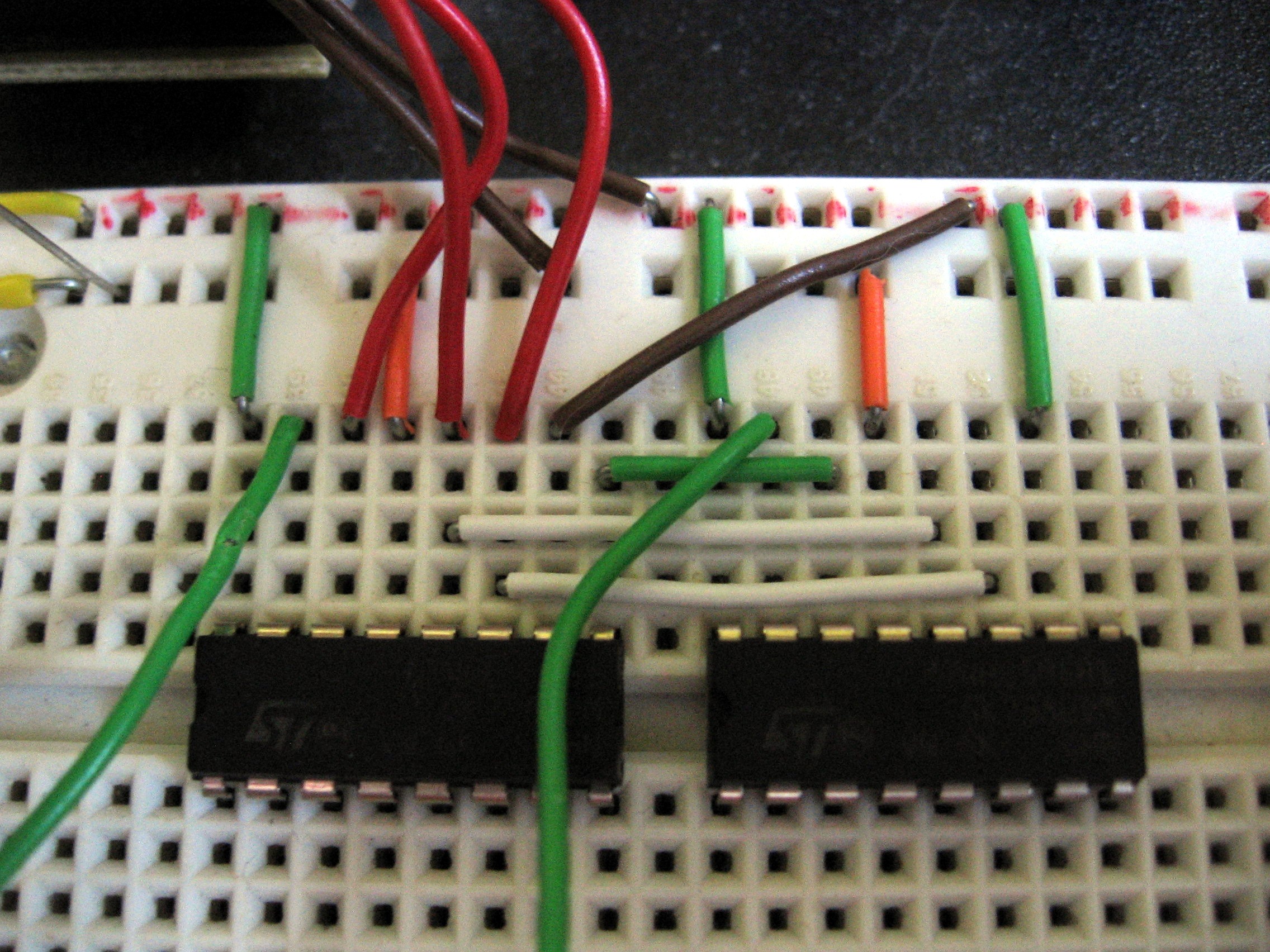
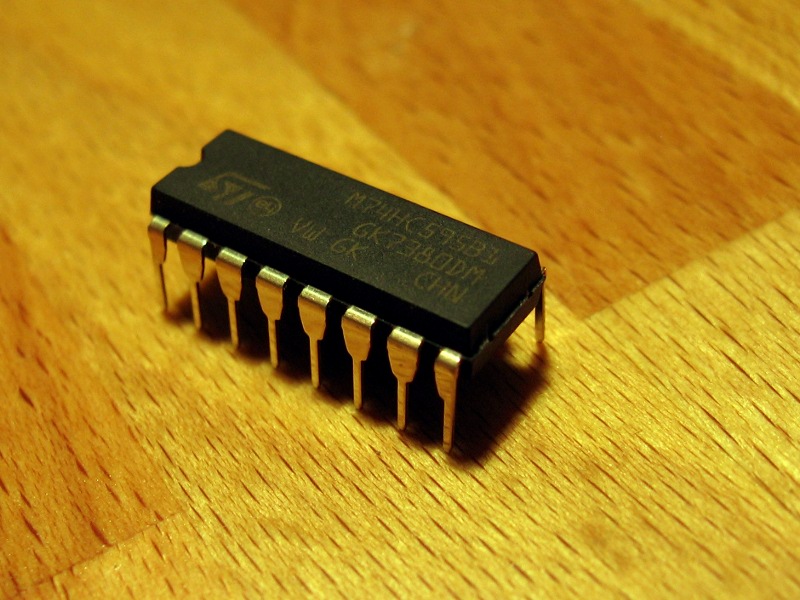
Shift Registers are integrated circuits that take a serial input and turn it into a parallel output. This is extremely valuable if you need more input/output pins than your microcontroller has available. For hobbyists the most common use is driving LEDs with a 595 shift register. Let’s look at how this is done.
After the jump I’ll discuss control methods, and I’ve assembled a video that illustrates the functions of a shift register.